5/26
In this Unnatural Causes episode, researchers explain the correlation between social and income inequalities and good health. The video explains the social determinants of health and how they relate to our overall well-being, with specific regards to chronic health problems and life expectancy. The video teaches that more than eating well and exercising, social conditions factor into our overall well-being as a result of the stress socioeconomic status brings or alleviates. In explaining this problematic correlation, one researcher says, “There are ways in which our society’s organized that are bad for our health.” He goes on to explain that death rates and illness are positively correlated to socioeconomic status. It makes sense to me that people in poor communities wouldn’t have easy access to healthy foods, that they would struggle financially, and that underfunded schools mean a worse education which means less socioeconomic mobility. However, I didn’t know of all health problems that were linked to socioeconomic stagnance and lack of choice.
After reading about racial disparities last week, I asked in the talking points about how a lack of education affects the health and well-being of underserved communities. Just as these inequalities provide some communities with poorer schools and less academic resources, so do they make those same communities more susceptible to health problems and earlier deaths. This video confirms that class is an important determinant of our health and well-being; if we receive good education, we are more likely to have choices in our lives and jobs, which will alleviate stress and allow us to live longer, healthier lives.
Education offers us ways to improve our health because it gives us access to better jobs. However, as the video points out, you have to be able to afford that education. This often means paying higher taxes to live in a more affluent neighborhood with a safer school system funded by taxpayers. And disparities between neighborhoods don’t just end with better education and more job opportunities: access to financial security and healthy foods and lifestyles are dependent upon the wealth of the communities as well. Burnell Colton, an entrepreneur and local resident of the lower ninth ward in New Orleans, recognized this disparity and took action. He opened a grocery store in the middle of a vast food desert and committed himself to helping a disadvantaged and underserved community. The map below illustrates the food deserts that exist in New Orleans. If the highlighted communities lack basic resources, they are also likely to lack good school systems, which therefore, according to the video, signal a stressed population whose well-being is compromised because of the social inequalities that exist around them.
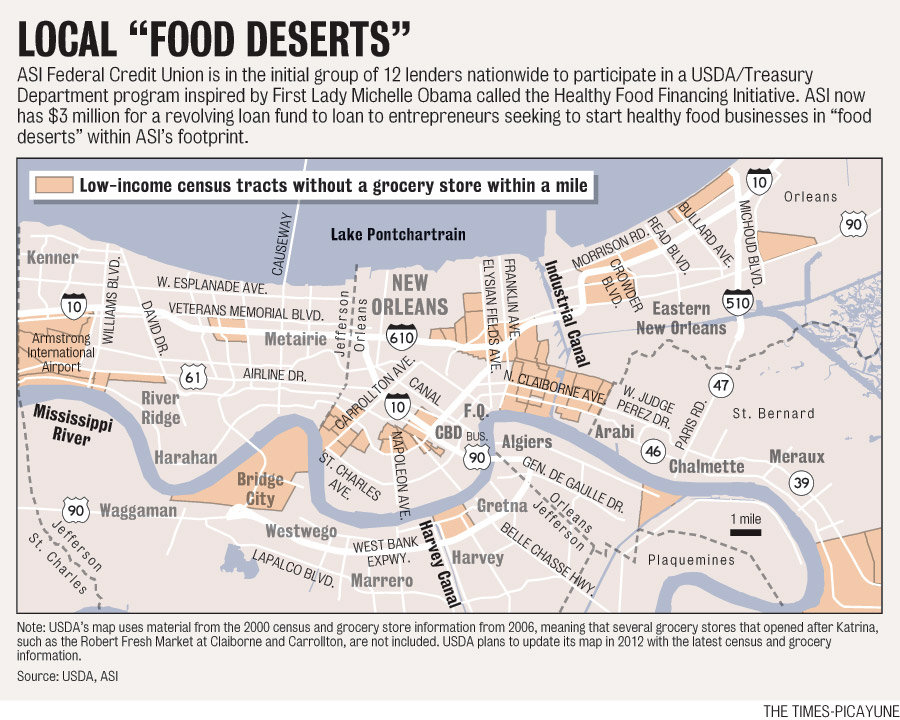
I hope to see local policymakers taking studies like these into consideration in their discourse on education. Like the video says, “economic policy is health policy.” If politicians don’t account for the socioeconomic disparities that exist within Providence, for example, the school system will never become equitable, and the poorer populations will face more disadvantages than the politicians’ decisions imply.
Thanks for this reflection and the important visual. I think Anyon's article suggests that these social determinants are very much the product of inequitable social and economic policies, and that taken together, all this undermines the potential of even the best intentioned school reform.
ResponderEliminarHello Elyse,
ResponderEliminarThank you for introducing me to Burnell Colton and his work. I just saw this video from PBS News Hour about his grocery store and how it is dealing with COVID-19.
https://www.pbs.org/newshour/show/how-this-new-orleans-grocery-store-owner-is-trying-to-sustain-his-community
In this video, Mr. Colton is struggling along with his community through the COVID-19 pandemic. Yet he realizes that the need for his grocery store to be open and willing to work with customers is even more important. I cannot imagine Walmart would be as generous as to write down shortages. I feel that situation really relates to the quote you mentioned "economic policy is health policy". From an economic standpoint, a small business owner who lives in the community is willing to take a loss to ensure the health of a community. Depending on the future of our world post-COVID-19, I wonder what Mr. Colton's social and economical status will be. Will he have pretty much sacrificed good health and long life so that others in the community can sustain theirs?
I definitely agree with your comparison to big businesses. I know The Moth (the podcast where I found out about Colton) had a GoFundMe posted for a while to raise money for him and his store. I'm not sure how much money they raised, but I remember it being successful. Thanks for sharing that PBS link. I've never been to New Orleans but am very invested in his mission now.
Eliminar